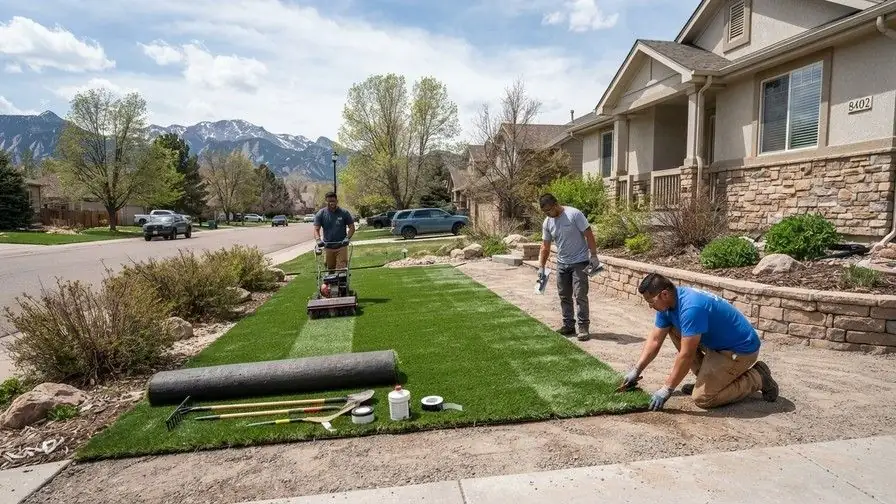
Deciding whether to replace a lawn is not always easy. Some Arvada homeowners are ready to be done with mowing, while others are not sure they want to give up the feel of real grass. This article lays out the main tradeoffs so you can decide what suits your yard and how you use it.
Is artificial grass better than a living lawn?
Neither is better for every yard. Artificial grass wins on water use, mowing and staying green through dry spells, and it handles heavy foot traffic well. A living lawn costs less to start, feels cooler on hot days and supports soil life. Many homeowners split the difference, using turf in high wear or hard to water areas and keeping some living grass or planting beds elsewhere.
Time and Water
A living lawn asks for steady attention from spring through fall: mowing, edging, watering, fertilizing and reseeding thin spots. In a dry summer, keeping it green can mean watering several times a week. Artificial grass removes nearly all of that. Upkeep comes down to blowing off leaves, rinsing now and then and brushing busy paths.
For households that travel, have limited time or simply do not enjoy yard work, that difference is often the deciding factor. For people who like working in the yard, the time a lawn takes may not feel like a cost at all.
Wear, Comfort and Heat
Grass struggles where people and pets walk the same path every day, and it thins out under trees and in deep shade. Artificial grass stays even in those spots. It also stays usable after rain, since a well built base drains quickly instead of turning to mud.
On the other side, living grass stays cooler under bare feet on a hot afternoon. Artificial grass can warm up in direct sun, though shade and a quick rinse help. Some people also simply prefer the softness and smell of a real lawn, and that is a fair reason to keep one.
Looks Through the Seasons
Artificial grass looks the same in March as it does in August, which many people like. There is no brown dormant stretch in winter and no burned patches in late summer. Modern products with mixed green tones and a thatch layer look convincing from the street.
A living lawn changes with the seasons, greening up in spring and fading in heat or cold. Some homeowners enjoy that rhythm, and a healthy lawn can look wonderful. It comes down to whether a consistent look or a living one matters more to you.
Choosing What Fits
You do not have to pick one for the whole yard. Turf in the busy back yard and a smaller living lawn or planting beds out front is a common mix. If you want to explore turf for part or all of your yard in Arvada, we can connect you with an independent local provider for a look.