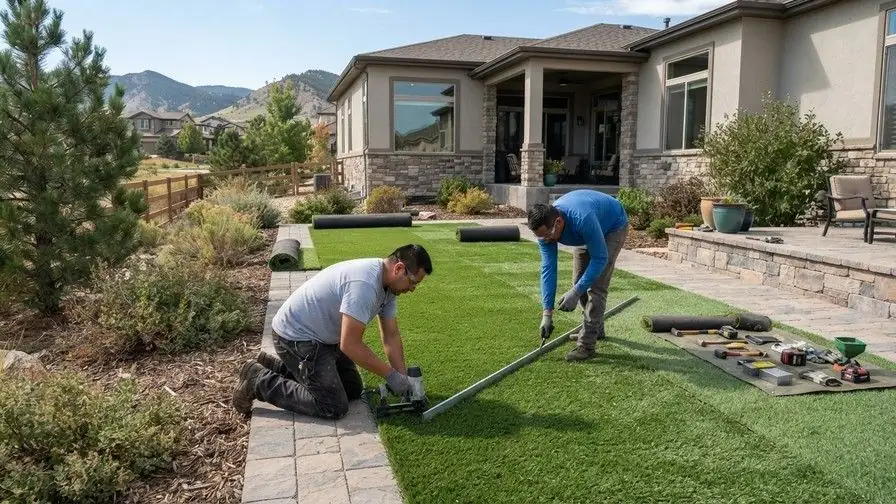
The best looking turf yards are planned, not just installed. A little thought about how your Arvada yard works, where the sun falls, how water moves and how people walk through it, goes a long way. This guide walks through a simple planning process you can do before anyone shows up to measure.
How do I plan artificial turf around my home?
Start with a sketch of the yard. Mark the areas you want covered, the beds and trees you are keeping, sunny and shady spots, slopes and anywhere water collects. Decide how each area is used, since play, pets and looks call for different products. Then plan the borders: how turf meets concrete, beds and tree rings. Bring the sketch to an estimate visit so the provider can build on it.
Draw a Simple Yard Map
Grab paper or a phone photo of the yard and outline the space. Mark the house, fences, patios, walkways and any trees or beds you want to keep. Then shade the areas you are thinking about turfing. It does not need to be to scale, just clear enough to talk through.
Add notes about sun and shade at different times of day, spots where snow sits longest in winter and anywhere puddles form after rain. Those details help the provider plan drainage and choose a product that suits each area.
Match Turf to How Each Area Is Used
Different parts of the yard do different jobs. A front yard is mostly seen, so a softer, natural looking blend often works best. A back yard with kids, dogs or outdoor furniture benefits from a tougher turf that springs back after heavy use. A dog run may need pet turf with faster drainage.
You can use one product throughout or mix them. If you mix, ask how the transitions will be handled so the change is clean. Sometimes a walkway, bed or border makes a natural break between two turf types.
Think About the Borders
Borders are what make a turf yard look finished. Along concrete, turf can be tucked tight to the edge. Along beds, a bender board or stone border holds the turf in place and keeps mulch or rock from washing onto it. Around trees, a ring of mulch or rock gives roots room to breathe.
Consider where you want hard edges and where you want a softer look. Curved beds can soften a large turf area, while straight lines suit a modern home. Talk through these choices before install day, since they affect the layout and the materials list.
Putting the Plan to Work
Bring your yard map to the estimate visit and walk the provider through it. Your notes on sun, water and use make their recommendations more accurate. When you are ready to start, we can connect you with an independent local turf provider who works in Arvada.